
17/1/2026 Azumi
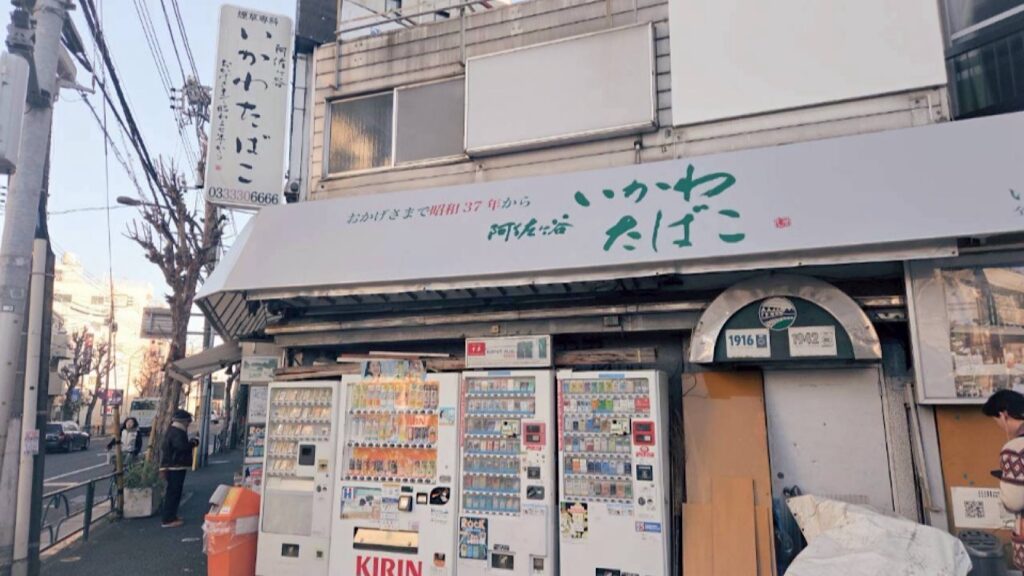
The shop stands at the intersection of Waseda Street and Nakasugi Street—a small, old-fashioned tobacco store that has been there since 1962.
It carries a wide selection of rare brands, making it a welcome place for smokers.
The owner is an elderly man with a white beard.
What I am about to write is a story of memories with that old man—memories that still linger in a quiet corner of this town.
When I was little, it was a weekly ritual: every Sunday afternoon, my father would take me to a nearby Chinese restaurant for a meal.
He would chat cheerfully with the regulars, enjoying horse racing or baseball on TV.
When he ran out of cigarettes, he would invite me—clearly bored—to take a short walk with him to the tobacco shop.
I would stretch on my tiptoes and knock on the small window set into a counter far too high for a child.
The old man would appear.
He wasn’t someone who smiled much, and without so much as a glance in my direction, he would begin talking with my father.
I watched him in the evening sun, thinking his beard looked like Santa’s.
Once I started school, that tobacco shop became part of my daily route home.
Around three in the afternoon, when I passed by, the old man was always there, sitting on a chair outside, smoking.
At first, even when I greeted him, he would only respond with a stiff nod, his face expressionless.
But little by little, he began to smile.
By the time I was about to graduate from junior high school, we would even stop and chat for a while.
After that, I stopped passing by the shop, and naturally, I saw him less and less.
As an adult, I moved away from Asagaya, but from time to time I would find myself wondering how he was doing.
Whenever I returned, I looked for him in front of the shop, but I rarely saw him.
Just as I was beginning to accept that I might never see him again, I spotted him—sitting in that same chair, exhaling cigarette smoke.
When I said, “Good evening,” he looked surprised and replied, “Good evening.”
From his expression, I could tell he didn’t recognize who I was; he had simply answered out of habit.
So I decided not to explain and started to walk away quickly.
Then, from behind me, he called out,
“Get home safe.”
The old man I remembered was not someone who spoke to strangers, so hearing that gentle voice and those words made me realize how much time had passed.
Walking down the dark street, I found myself wishing that he would always be there—unchanged—sitting in that chair, smoking.
He may seem a little hard to approach, but if you ever see a white-bearded old man smoking at that corner intersection, I hope you’ll try speaking to him.
You might just catch a glimpse of his surprised face—and his quiet kindness.
(原文)
早稲田通りと中杉通りが交差する場所に位置するそのお店は、昭和37年から続く昔ながらのたばこ屋さんです。
珍しい銘柄を多く揃えていて、喫煙者には嬉しいお店のようです。
白い髭を生やしたおじいさんが、そのお店の店主です。
これから綴るのは、この街の片隅に今も残るおじいさんとの記憶の話です。
幼少時、毎週日曜日の午後になると父に連れられて近所の中華料理屋でご飯を食べるのが恒例でした。
父は周りの常連さんとワイワイ話しながら、競馬や野球をテレビで楽しみます。
手持ちのたばこがなくなると、父は暇を持て余す私を連れてたばこ屋さんまでの散歩に誘います。
子供の背丈には高すぎるカウンターの小さな窓を背伸びしてコンコンと叩くと、おじいさんが出てきます。
あまり笑顔を見せない方で、私の方には見向きもせずに父と話し出すおじいさんを、
サンタみたいな髭だな、と思いながら、夕陽の中で見つめていました。
学校に通うようになると、そのたばこ屋さんは通学路の一部になりました。
私が帰路に着く15時頃、決まっておじいさんは外に置いた椅子に座ってたばこを吸っています。
最初のうちは挨拶をしても、無表情で会釈で返してくれる程度でしたが、だんだんと笑顔を見せてくれるようになり、中学卒業間近になると立ち話をするほどになりました。
それ以降はなかなかそのお店の前を通らなくなってしまい、おじいさんに会うことも少なくなりました。
大人になり、阿佐ヶ谷から離れて住むようになりましたが、あのおじいさんは元気かなと時々考えます。
阿佐ヶ谷に戻ってくるたびに、お店の前に姿を探しましたが、なかなか会うことができず、
もう会えないのかもしれないと諦めかけた頃、
あの椅子に座ってたばこを吹かすおじいさんを見つけました。
「こんばんは」と声をかけると、驚いた顔で「こんばんは」と返してくれました。
表情から、誰か分からず返事をしてくれたことは汲み取れたので、話はせずに足早に立ち去ろうとすると、
「気をつけて帰れよ」とおじいさんが後ろから声をかけてくれました。
記憶の中のおじいさんは知らない人に声をかける方ではなかったので、その優しい声色と言葉に年月が経ったのだと感じました。
夜道を歩きながら、いつまでも変わらず、あの椅子に座ってたばこを吸っていて欲しいと思いました。
少し話しかけにくいかも知れませんが、あの交差点の一角で、たばこを吸う白い髭のおじいさんを見つけたら声をかけてみて欲しいです。
おじいさんの驚いた顔と、優しい一面を見れるかもしれません。